
Security Crisis: What's Really Happening and Who's Affected
When people talk about a security crisis, a widespread breakdown in public safety that undermines trust in institutions and daily life, they’re not just referring to violent crime. It’s the mother waiting in line at an ATM for her SASSA grant, scared to look up. It’s the Kenyan family whose electricity token runs out at dusk because the tariff system doesn’t match their usage. It’s the community watching helplessly as leaders argue over power instead of protecting people. A security crisis, a widespread breakdown in public safety that undermines trust in institutions and daily life doesn’t start with a gunshot—it starts with a broken promise.
What makes this different from ordinary crime is how deeply it ties into government response, the actions—or lack thereof—by state institutions to restore order and protect citizens. When SASSA delays grant payments, it’s not just a payment issue—it’s a security issue. People are forced into dangerous situations just to survive. When President Ruto rolls out a KSh5 billion youth program, it’s not just job creation—it’s an attempt to stop a generation from turning to violence out of desperation. And when Nyesom Wike warns that pushing Goodluck Jonathan for 2027 could spark a crisis, he’s not just playing politics—he’s predicting how political instability can unravel the social fabric. These aren’t separate stories. They’re all parts of the same machine breaking down.
Look closer and you’ll see how public safety, the collective sense of protection and predictability in daily life is being eroded by neglect, not just violence. Kenya Power’s confusing three-tier tariff leaves households guessing how much power they’ll get—forcing them to hoard tokens or go dark, making neighborhoods vulnerable after sunset. When the Patriotic Alliance threatens to quit the GNU over a transport job, it’s not just about Kenny Kunene—it’s about who gets to feel safe in their own city. And when G7 countries sanction nations buying Russian oil, it’s not just about energy—it’s about global power shifting, and how that ripple affects local economies, jobs, and ultimately, safety.
There’s no single villain here. No one person caused this. But there are patterns: delays in aid, opaque systems, broken promises, and leaders who treat crises like political chess pieces. The people suffering aren’t just statistics—they’re the ones lining up for grants, the ones paying twice as much for half the electricity, the ones wondering if their kids will have a future without fear. Below, you’ll find real stories from South Africa, Kenya, Nigeria, and beyond—each one showing how a security crisis isn’t a headline. It’s a daily reality.
Gunmen Kill Two, Kidnap Pastor in Nigeria Church Amid Rising US Pressure
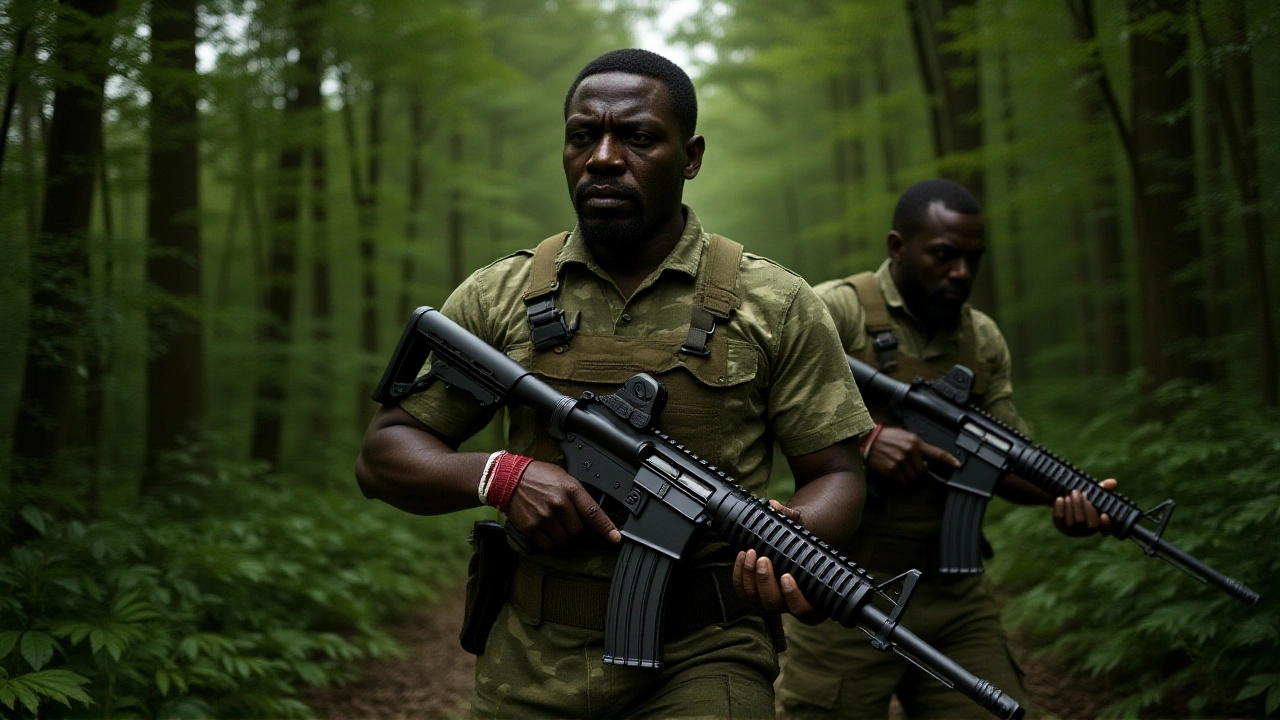
Gunmen killed two and kidnapped a pastor during a church attack in Kwara State, Nigeria, on November 18, 2025 — one day after 25 schoolgirls were abducted in Kebbi State. With 857 abductions in 2025 alone, rising US pressure is forcing Nigeria to confront its deepening security crisis.
More