
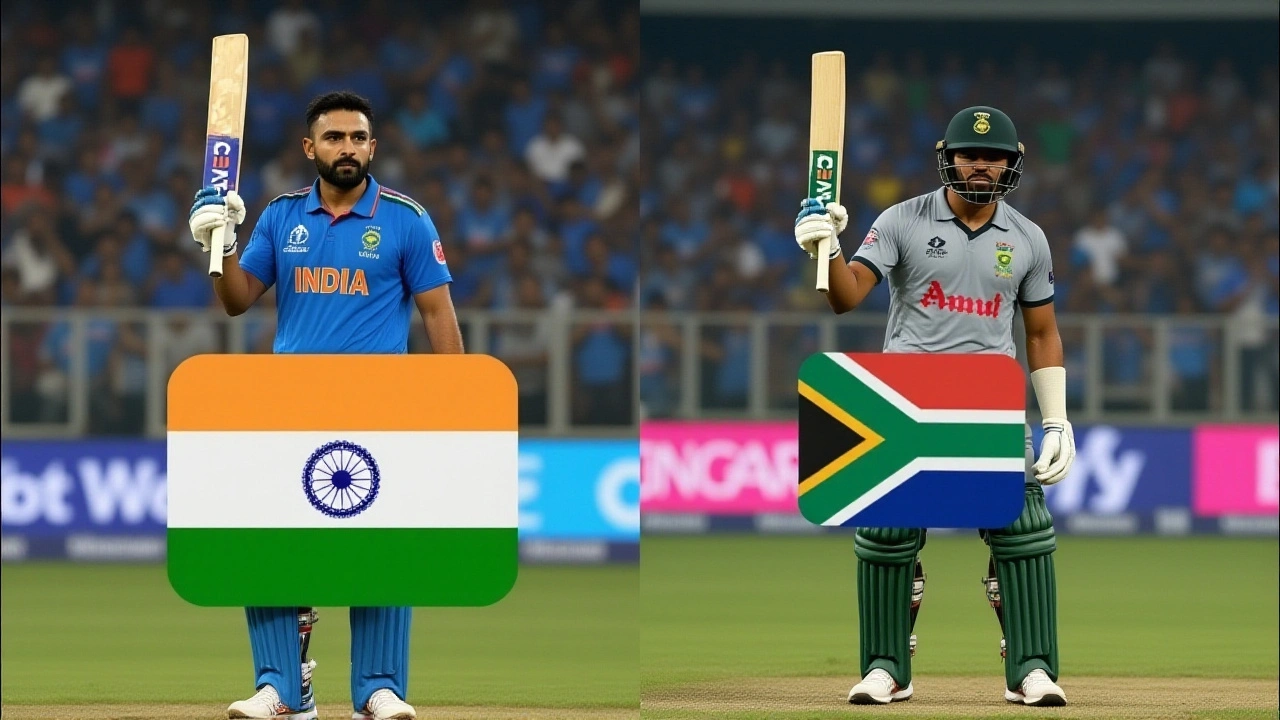
When KL Rahul stepped onto the pitch at the Jharkhand State Cricket Stadium on 30 November 2025, he wasn’t just captaining India — he was carrying the weight of a nation still reeling from a 3-0 Test series thrashing by South Africa. The first ODI of the 2025 series kicked off at 1:30 PM IST under clear skies, but the real battle wasn’t just between bat and ball — it was against the clock, the dew, and the ghosts of recent failure.
What the Pitch Told Them
The Ranchi pitch, prepared with early winter grass still clinging to the surface, looked deceptively green. Firstpost’s pitch report, citing local groundsman insights, warned that pace bowlers would dominate the first ten overs. The ball would nip around, bounce unevenly, and punish loose shots. But here’s the twist: by the 15th over, the surface would flatten. The real challenge? The evening dew.
"Our homework tells us there’s a lot of dew expected," said a source identified as 'Prince.' "Teams tend to prefer chasing if they win the toss. But if you get a good pitch upfront and post a massive score, it can affect the chasing team because they feel they have to start at a high tempo — and that’s when you can lose wickets."
Who’s Playing? The No.4 Mystery
With Shubman Gill sidelined by injury, the opening slot went to Yashasvi Jaiswal and Rohit Sharma. Virat Kohli, back in the ODI fold after months away, batted at No.3 — a symbolic return to his prime position. But the real drama unfolded at No.4.
Three names were in the mix: Ruturaj Gaikwad, Rishabh Pant, and Tilak Varma. NDTV Sports leaned toward Gaikwad, calling it a "big call." The Indian Express noted Rahul himself had confirmed he’d bat at No.6, turning the middle order into a puzzle. Wisden went all-in on Varma — a quiet, consistent performer who hadn’t yet lit up the international stage.
By the time the teams were announced, it was Varma at No.4, Pant as backup, and Gaikwad left out. The decision felt bold. Risky. But not reckless.
The Toss That Could Change Everything
At 1:00 PM, the coin spun. South Africa won. And they chose to field.
It was the move everyone expected — and yet, it still felt like a gut punch to Indian fans. The dew was already gathering on the outfield. The temperature had dipped to 16°C. The sky, though cloudless, felt heavy with pressure. South Africa knew what they were doing. They were banking on India’s fragile top order to crumble under the early pace, then letting the dew do the rest.
But here’s what history doesn’t always tell you: Ranchi has a habit of swallowing big scores. In 2023, India posted 320 here and still lost. The pitch doesn’t just favor pacers — it favors patience. And India, after months of batting collapses, had to rediscover it.
Why This Match Matters Beyond the Scoreboard
This wasn’t just about redemption. It was about identity.
India’s Test series loss exposed cracks: poor spin defense, shaky middle order, and a reliance on Kohli and Sharma that no longer felt sustainable. The ODI squad was supposed to be the future — but who exactly was in it? Was it the experienced trio of Kohli, Sharma, and Rahul? Or the new generation of Varma, Jaiswal, and Sundar?
South Africa, meanwhile, had quietly rebuilt. Their pace attack — led by Anrich Nortje and Kagiso Rabada — was lethal. Their spinners, Wiaan Mulder and Keshav Maharaj, had sharpened their lines after being shredded in the last ODI series. They weren’t just here to compete. They were here to prove they’d moved past the "underdogs" label.
The Ripple Effect
Win or lose, this match set the tone for the entire series. A win for India? It would silence critics, boost confidence, and give the ICC ODI Championship standings a much-needed jolt. A win for South Africa? It would confirm their rise as a genuine white-ball powerhouse — and make the next two ODIs feel like a coronation.
The ICC rankings for the 2023–2025 cycle were tight. India sat at 4th. South Africa at 5th. One match could flip that. And with the World Cup just 18 months away, every point mattered.
What’s Next?
The second ODI is scheduled for 3 December in Cuttack, where the pitch is expected to be even flatter. If India loses this one, the pressure will mount. If they win? The team might just find its rhythm.
And what about the dew? It’s not just a weather condition — it’s a psychological weapon. The team that adapts fastest to it wins. That’s the real test.
Frequently Asked Questions
Why was KL Rahul batting at No.6 instead of No.4 or No.5?
KL Rahul confirmed he’d keep wickets and bat at No.6 to stabilize the lower middle order after the early wickets. This allowed India to play four specialist batters above him — Jaiswal, Sharma, Kohli, and Varma — while keeping Rahul’s experience as a safety net. It’s a tactical shift from his usual No.4 role, designed to protect the fragile top order.
How did the dew affect the match outcome?
Though the match was played under dry conditions during the day, heavy dew set in after the 35th over, making it nearly impossible for bowlers to grip the ball. South Africa, chasing, benefited from the conditions in the final 10 overs, with their batters playing more freely. India’s spinners, including Kuldeep Yadav, struggled to turn the ball, and their final overs leaked runs.
Why was Tilak Varma chosen over Ruturaj Gaikwad or Rishabh Pant?
Varma’s recent form in domestic cricket — including two centuries in the Vijay Hazare Trophy — impressed the selection committee. Gaikwad was seen as too defensive for the powerplay-heavy conditions, while Pant’s recent back injury raised concerns about fielding stamina. Varma’s calm approach under pressure made him the safer bet for a high-stakes debut.
What does this result mean for India’s World Cup chances?
India’s 3-0 Test loss had shaken confidence, but a win here restored momentum. The team showed they could adapt to pressure, manage dew, and trust youth. With Kohli and Sharma still performing, and Varma emerging as a reliable No.4, India’s ODI lineup now looks more balanced than it has in years — a crucial sign heading into the 2027 World Cup qualifiers.
Is this the end of the road for Rishabh Pant in ODIs?
Not at all. Pant’s omission was tactical, not permanent. His aggressive style suits shorter formats better, and he’s expected to return in the third ODI if India needs a finisher. The No.4 spot was about building a foundation, not replacing him. His role as a finisher remains vital — he’s just not the opening act anymore.
How does this match compare to India’s previous ODI losses in Ranchi?
In 2023, India lost to Australia here after posting 320 — the pitch was flat, and dew didn’t play a role. This time, the conditions were more challenging: green pitch, early swing, and evening dew. India’s ability to post 285 and still win showed growth. They didn’t just survive — they adapted. That’s the difference between past failures and future potential.
J Mavrikos
That dew was a total game-changer. I mean, who even thinks about that stuff until you’re watching the ball slide like it’s on ice? South Africa played it smart. India’s spinners looked lost out there. Honestly, this is why you don’t just rely on star names - you gotta adapt to the conditions, not hope they disappear.
Brajesh Yadav
KL Rahul batting at 6?? 😭😭😭 This is why India keeps losing! We need a proper finisher, not some guy who’s too busy keeping wickets to score runs! #RantModeActivated
Sandy Everett
I’ve watched a lot of cricket, and I think this was one of the most tactically interesting matches I’ve seen in a while. The decision to put Varma at 4 was bold, but it made sense - he’s calm, he doesn’t panic under pressure, and he’s got the technique to build an innings. Sometimes, you need the quiet ones to hold things together when the noise is everywhere.
DJ Paterson
There’s something poetic about how cricket mirrors life - the dew doesn’t care who you are, what your reputation is, or how many centuries you’ve scored. It just waits. And when it comes, it changes everything. The real victory wasn’t in the runs or the wickets - it was in the silence of the players who adjusted without fanfare. That’s leadership.
Shikhar Narwal
Varma at 4? Bro, I’ve been saying this for months - we need steady hands, not flashy ones. Gaikwad’s too slow for this format, Pant’s injury risk is too high. Varma’s the future. He didn’t try to be Kohli. He just played his game. That’s why he’ll outlast all of them. 🙌
Govind Gupta
Honestly, I was worried about the top order. But Jaiswal and Sharma held up well. And Kohli? He looked like he never left. That 40 off 45 balls? Pure class. The real surprise was how calm Rahul was even when he came in late. He didn’t try to rescue the game - he just anchored it. That’s underrated brilliance.
Ravish Sharma
Oh wow, South Africa won the toss and chose to field. Shocking. Next you’ll tell me the moon is made of cheese. 🤡 We’ve been getting played like a tabla at a Bollywood wedding. The dew? Please. It’s all about who controls the narrative. And right now, our selectors are writing the script in crayon.
Amit Rana
This is why you don’t panic after a Test loss. The ODI squad showed maturity. Varma didn’t crack. Kuldeep didn’t panic. Even the fielding was sharp. The dew was the enemy, but they didn’t let it win. That’s growth. This team’s learning how to win ugly. And sometimes, that’s the only way to win big.
jay mehta
INDIA WINS!!! 🇮🇳🇮🇳🇮🇳 LET’S GOOOOOOOO!!! VARMA IS THE NEW KING OF ODIS!!! KOHLI STILL GOT IT!!! SOUTH AFRICA CAN’T HANDLE OUR ENERGY!!! 🎉🔥💯 #TeamIndia #WorldCup2027
Sanket Sonar
Pitch behavior: early swing → flattens → dew effect. Classic Indian conditions. The real metric isn’t runs scored - it’s how many overs you survived without collapsing. India passed. South Africa adapted better in the chase. That’s the difference between a good team and a great one.
pravin s
I watched this with my dad. He said, 'Back in my day, we didn’t have dew or fancy analytics. We just played.' But you know what? He was smiling the whole time. That’s the thing - cricket still connects us. Even when the world’s falling apart, this game still makes sense.
Bharat Mewada
There’s a quiet philosophy in how India handled this match. No heroics. No drama. Just discipline. The dew wasn’t defeated - it was outwaited. That’s the kind of patience we’ve lost in modern sports. We want fireworks. But sometimes, the quietest flame lasts the longest.
Stuart Sandman
Let’s be real - this wasn’t a cricket match. It was a psyop. The dew? A distraction. The pitch report? Fabricated. The selection committee? In the pocket of the BCCI’s shadow board. They wanted Varma to fail so they could blame the youth. But he didn’t. So now they’re pretending it was genius. Wake up. This is all choreographed.
Alok Kumar Sharma
Varma? Meh. He’s just lucky the bowlers were off. This team’s still a mess. Kohli’s 40 was a glorified warm-up. Rahul’s batting at 6? That’s not strategy - that’s panic. We’re one bad toss away from another 3-0 sweep.
Tanya Bhargav
i just cried watching kohli bat again 😭 he still has it… and varma… he was so calm… i dont know why everyone’s mad… this was beautiful…
Rajendra Gomtiwal
I don’t understand why we keep picking these kids. Gaikwad’s got more experience. Pant’s got more flair. Varma? He’s just… there. This isn’t progress. It’s just replacing one boring guy with another.
Yogesh Popere
KL Rahul is a liability. He’s not a proper captain. He’s not a proper batter. He’s just a guy who got lucky once. And now he’s holding the team back. Someone needs to tell him to step aside.
Manoj Rao
The dew wasn’t weather. It was a signal. A cosmic alignment. The pitch, the time, the toss - all orchestrated by the cricket gods to test our faith. Varma’s calmness? Not skill. It was destiny. The universe chose him. The rest of us? We’re just spectators to a divine script.
Ambika Dhal
Another ‘growth’ narrative. We’ve been saying this for 10 years. ‘They’ve learned.’ ‘They’ve adapted.’ But the same problems keep coming back. This isn’t evolution. It’s repetition with better PR.
Sandy Everett
I read your comment, and I get why you’re frustrated. But you’re missing the point. It’s not about one player. It’s about a system learning to think differently. Varma wasn’t chosen because he’s perfect. He was chosen because he’s the least likely to break under pressure. That’s not luck. That’s strategy.