
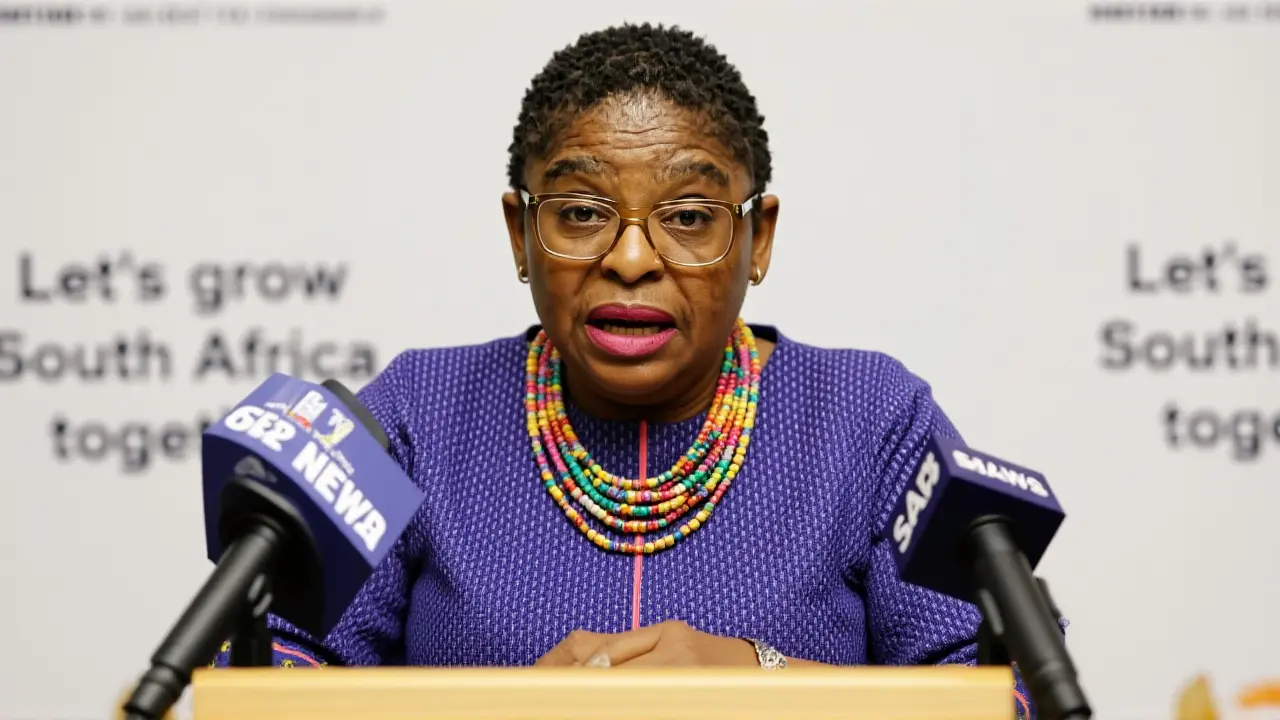
When Khumbudzo Ntshavheni, Minister in the Presidency of South Africa, stepped up to the podium during the 2026 State of the Nation Address debate, she wasn't just reading a script. She was outlining a high-stakes rescue mission for the country's failing water infrastructure, a massive purge of the police ranks, and a historic diplomatic win on the world stage. It's a lot to take in, but the core message is clear: the government is trying to move from planning to actual execution.
Here's the thing: South Africa has been fighting a losing battle with water scarcity and systemic corruption for years. But the latest updates suggest a shift in how these crises are being managed, moving the responsibility directly into the hands of the President. From the streets of Johannesburg to the halls of the G20, the stakes have never been higher.
Tackling the National Water Crisis
Water isn't just a utility; it's a survival issue. To stop the bleeding, the President has elevated the response by creating a National Water Crisis Committee, which he will personally chair. It's a bold move, essentially admitting that the usual departmental silos weren't working.
Working alongside the Department of Water and Sanitation, the Office of the Vice President is currently hammering out a Water Action Plan. We can expect the final version by mid-March 2026. Interestingly, the strategy isn't just about fixing pipes. It's split into three specific goals: immediate emergency relief, long-term sector reform, and—perhaps most importantly—unlocking new investments for municipal infrastructure that has been crumbling for a decade.
Turns out, the biggest hurdle isn't just money, but expertise. The government is currently calling for technical capacity to help municipalities that are simply overwhelmed. Without these specialists, a fancy plan on paper won't translate to water in the taps.
Cleaning House: The SAPS Re-Vetting Process
The fight against organized crime has taken a turn toward internal housekeeping. The President has ordered the State Security Agency (SSA) to start revetting senior management within the South African Police Service (SAPS) and various Metro Police Departments. If you're in a high-ranking position, your history is about to be scrutinized.
The twist is that they aren't starting randomly. The SSA is prioritizing officers and managers who were implicated in the Madlanga Commission. The Ekurhuleni metro police department is the designated starting point for this purge. It's a clear signal that those suspected of corruption won't be allowed to climb the ladder.
This isn't just a casual check. The revetting will apply to anyone due for promotion into senior management. By the end of February 2026, a full SAPS Re-Vetting Plan will be handed over to the National Commissioner of Police and the Joint Standing Committee of Intelligence. It's a high-pressure timeline for a system that usually moves at a snail's pace.
Diplomatic Wins at the G20 Summit
While the domestic front is chaotic, the international stage provided a moment of triumph. During the G20 Leaders' SummitJohannesburg, South Africa managed to steer the global conversation toward the developing world.
Speaking from the media center at Nasrec, Ntshavheni shared a detail that left many surprised: the word "Africa" appears 80 times in the final G20 declaration. For context, that is the highest frequency in the history of the summit. It's not just a vanity metric, either. The declaration was adopted "by acclamation," meaning there was overwhelming agreement to prioritize African interests in global governance.
This shift reflects a growing geopolitical reality where Africa is no longer just a recipient of aid but a shaper of policy. However, the Minister also had to clarify some protocol hiccups, noting that the formal handover of a Chargé d'Affaire had to happen at the Department of International Relations and Cooperation (DIRCO) offices, as the President cannot personally hand over to a government official due to international protocols.
Accountability and the Zondo Legacy
The ghost of state capture still looms large, but there's actual progress on the Zondo Commission's findings. Ntshavheni reported that 57% of the Zondo Commission Action Plan has been implemented. It's a decent start, but there's still a long way to go before full accountability is achieved.
To keep the pressure on, the government is sticking to a strict reporting schedule. A third progress report is due to Parliament in March 2026, with a fourth following in June 2026. This process is running in parallel with the Madlanga Commission findings, creating a dual-track approach to cleaning up the state's machinery.
On a more positive note for the average citizen, the "iStimela-as-Bantu" rail improvements are reportedly making a dent in the cost of living. By getting more people back on trains at lower costs, the government is attempting to ease the financial burden on daily commuters—a small but vital win for the working class.
Frequently Asked Questions
What exactly is the Water Action Plan and when will it be ready?
The Water Action Plan is a strategic framework developed by the Office of the Vice President and the Department of Water and Sanitation. It focuses on three pillars: immediate crisis intervention, sector reforms, and unlocking infrastructure investment. The final plan is scheduled for completion by mid-March 2026.
Who is being targeted in the SAPS re-vetting process?
The State Security Agency is prioritizing the revetting of senior management and police officers who were implicated in the Madlanga Commission. The process begins with the Ekurhuleni metro police and will also include any officers currently eligible for promotion into senior management structures to ensure integrity in leadership.
Why was the G20 declaration considered a historic win for Africa?
The declaration is historic because it explicitly mentions "Africa" 80 times—the most ever in a G20 summit. Beyond the numbers, the document was adopted by acclamation and specifically prioritizes the interests of Africa and the developing world, signaling a shift in global governance influence.
How much of the Zondo Commission's recommendations have been met?
Currently, 57% of the Zondo Commission Action Plan has been implemented. The government is providing ongoing updates to the Standing Committee on Public Accounts (SCOPA), with the next progress reports scheduled for March and June 2026 to ensure transparency and accountability.
Shelley Brinkley
80 times in a paper doesnt mean anything actually happened lol just word salad for the cameras
Dianna Knight
It is so heartening to see this level of strategic alignment! 🌟 Getting the G20 to pivot toward the Global South is a huge win for inclusive governance and systemic equity. The synergy between the domestic reforms and international visibility is exactly the kind of holistic approach needed to move the needle on these KPIs! 😊
Josh Raine
The irony of using a security agency to vet a police force is almost too much to bear. We are essentially trusting the watchers to watch the watchers. If the systemic rot is deep enough, the vetting process itself becomes a tool for political purging rather than actual justice. It's a cycle of mistrust that never ends. :-)
Gary Clement
the focus on technical capacity for municipalities is the most realistic part of the water plan because without actual engineers on the ground no amount of funding will fix a leaking pipe
nikolai kingsley
57 percent implementation is a joke honestly. where is the rest of the money and why are these people still walking free. total failure of morale and law
Antony Bachtiar
water plan is just another way to steal money honestly. they'll announce a plan in march and by april the fundsll be in some offshore account in the caymans. classic goverment move
Angie Khupe
I really hope the rail improvements help people get to work more easily. It's the small changes that make the biggest difference in people's daily lives! <3
Anil Kapoor
The naive belief that mentioning 'Africa' eighty times in a diplomatic document translates to actual geopolitical power is laughable. These summits are designed for optics, and the 'acclamation' mentioned is merely a courtesy of international diplomacy, not a shift in the global power hierarchy. Anyone with basic knowledge of international relations knows this.
Beth Elwood
The SAPS re-vetting is a critical step! 🛡️ Cleaning out the senior management is the only way to stop organized crime from infiltrating the state. It's about time the Madlanga Commission findings were actually acted upon. 📈💪
Mason Interactive
Pretty cool to see Africa getting more visibility on the world stage. Even if it's just on paper for now, it's a step in the right direction for the continent's image.
Aaron X
The dialectic between domestic instability and international prestige here is fascinating. By leveraging the G20's discursive framework, the administration attempts to project a facade of ontological security while the internal infrastructure suffers from a profound state of entropy. The cognitive dissonance required to celebrate a word-count in a declaration while the taps are dry is staggering.
Mel Alm
hope the re-vetting actualy works this time and doesn't just be a paper exercise
Alex Green international
It is my sincere hope that these initiatives yield positive results for the citizenry. The structured approach to the Zondo reports is a commendable effort toward transparency