
US Dollar: What It Is, Why It Matters, and How It Shapes Global News
When you hear US Dollar, the world’s most traded and held reserve currency, used by governments, banks, and businesses across continents. Also known as greenback, it’s the invisible hand behind everything from oil prices to foreign aid. It’s not just paper and coins—it’s the default language of global finance. Whether you’re buying gold in India, paying for Russian oil in China, or getting a SASSA grant in South Africa, the US Dollar is quietly pulling the strings.
Take the G7 sanctions, a coordinated effort by wealthy nations to punish countries trading with Russia. When the G7 targets nations buying Russian oil, they’re not just blocking ships—they’re forcing those buyers to pay in currencies other than the US Dollar. That’s why India and China are quietly shifting to rupees and yuan. The Dollar’s dominance isn’t guaranteed—it’s being tested every day. And when inflation spikes in Kenya or Nigeria, it’s often because the Dollar got stronger. When the Fed raises interest rates, money flows out of emerging markets like Kenya and Nigeria, making their local currencies weaker. That means electricity tokens in Kenya, groceries in Lagos, and school fees in Nairobi all get more expensive overnight.
The global economy, the interconnected system of trade, debt, and investment that ties every country together runs on the US Dollar. Even when you’re reading about a church attack in Nigeria or a rugby final in Bilbao, the Dollar is in the background. Why? Because foreign investors, aid groups, and even armed groups all need dollars to move money, buy weapons, or pay ransom. The 857 kidnappings in Nigeria this year? Many of those ransom demands are in US Dollars. The record $1 trillion spent on gold in India? That’s because Indians trust gold more than their rupee—but they still price gold in dollars.
And it’s not just about money. When Elon Musk runs a voter sweepstakes in Philadelphia, the prize is in US Dollars. When Brazil beats South Korea 5-0 in Seoul, the players’ contracts, sponsorships, and transfer fees? All in US Dollars. Even Kenya’s KSh5 billion youth program? It’s funded with loans tied to dollar-denominated bonds. The Dollar doesn’t just pay for things—it shapes who gets power, who gets left behind, and what stories make headlines.
You’ll see this play out in the articles below. From Nigeria’s security crisis to G7 trade moves, from Kenya’s power tariffs to India’s gold rush—the US Dollar is the thread. Not every story mentions it outright. But if you know where to look, you’ll see it in every line.
Naira Surges to 1,480 to the Dollar in September 2025 Amid Steady Forex Reforms
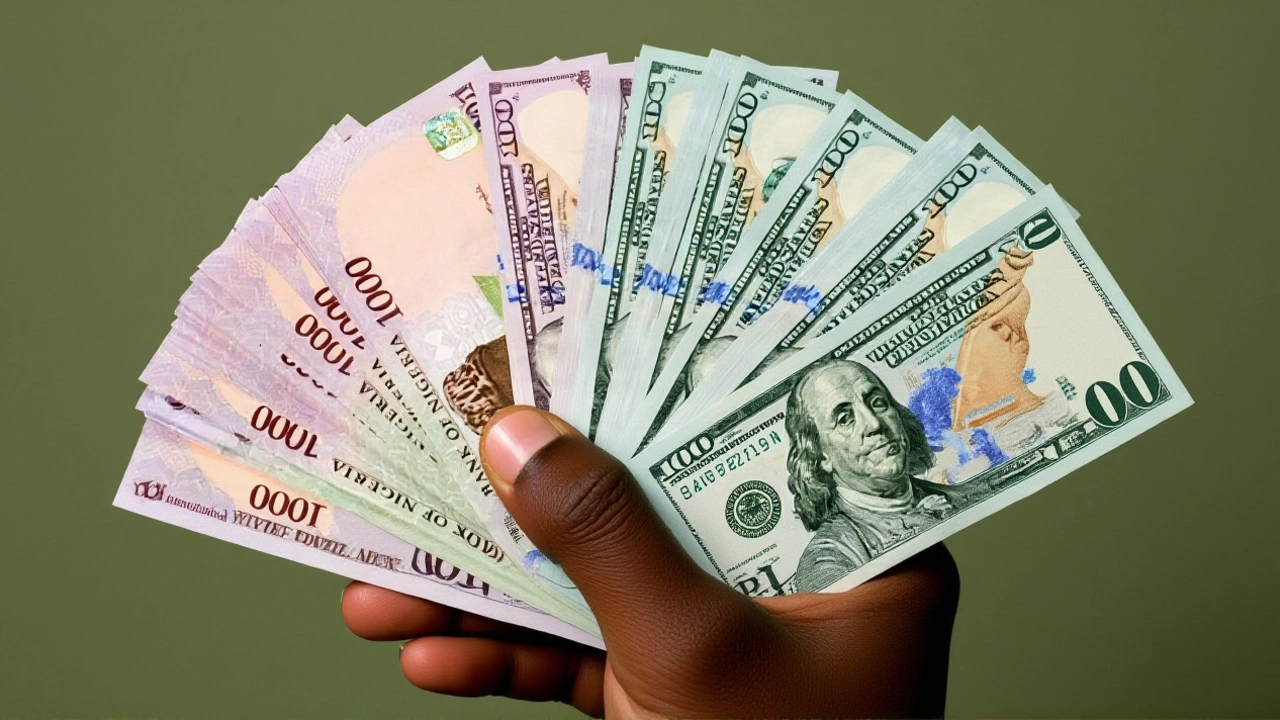
The Nigerian Naira strengthened to 1,480 per USD in September 2025, marking its best monthly performance in years, driven by CBN forex reforms, higher oil revenue, and reduced black market activity.
More