
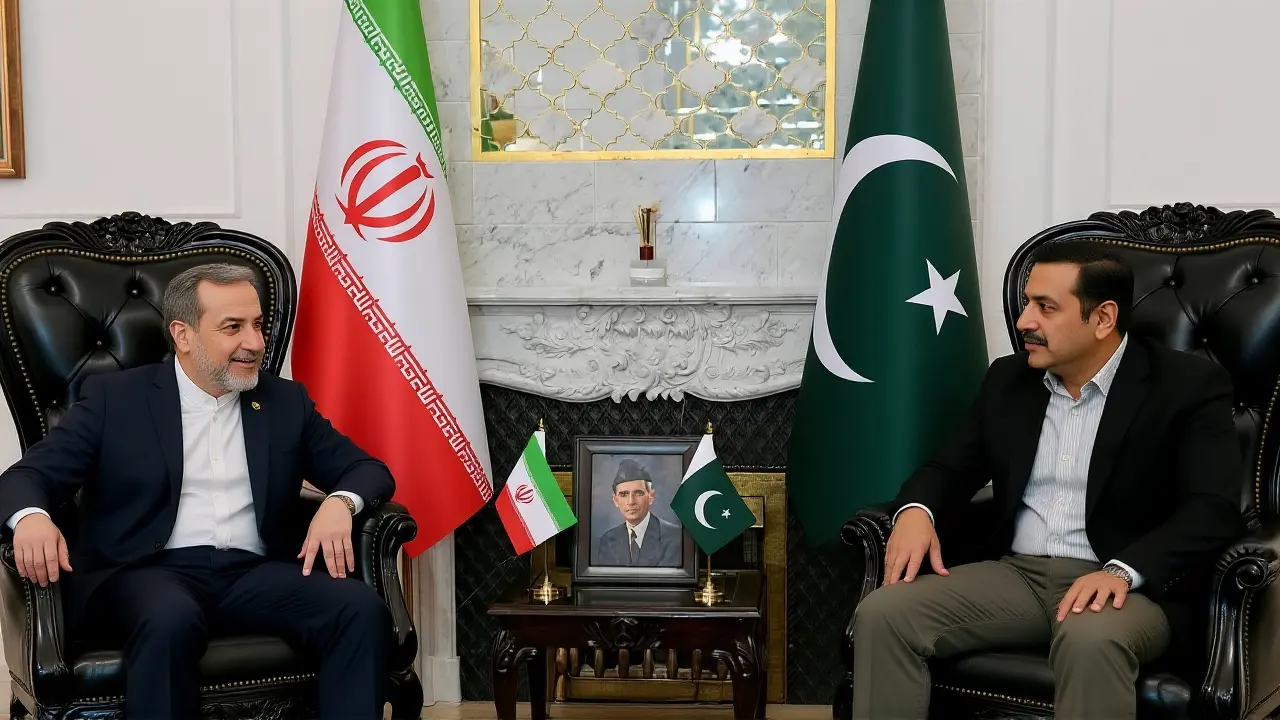
A high-stakes attempt to break the diplomatic deadlock between Washington and Tehran hit a wall this weekend. On Saturday, April 26, 2026, Donald Trump, President of the United States, abruptly canceled a mission to Islamabad, Pakistan, for two of his top negotiators. The move comes as a sharp blow to hopes for a quick resolution to the two-month conflict currently gripping the two nations.
The canceled trip was supposed to bring Steve Witkoff, a special envoy, and Jared Kushner, the president's son-in-law, to the table with Iranian officials. The goal was simple: find a way out of the current war. But the plan evaporated after the Iranian Foreign Minister left Pakistan without a breakthrough, leaving the U.S. delegation with no one to meet and a very long flight to consider.
The Breakdown in Islamabad
Here's the thing: diplomacy is often about timing, and this time, the timing was completely off. Seyed Abbas Araghchi, the Foreign Minister of Iran, spent the day meeting with Pakistan's top leadership, including the Prime Minister and army chief. While Araghchi later described these meetings as "very fruitful" on social media, the reality on the ground was far colder. No one reached a deal.
The sticking point? The U.S. naval blockade. Iran is playing hardball, insisting that the blockade be lifted as a prerequisite before any real discussions on peace can even begin. Turns out, that's a bridge too far for the current White House. When Araghchi departed Islamabad for Muscat, Oman, he didn't leave a window open for Witkoff and Kushner to step through.
The result was a swift reaction from the Oval Office. President Trump took to Truth Social to vent his frustration, claiming that the Iranian leadership is plagued by "tremendous infighting and confusion." He didn't mince words, suggesting that the Iranians don't even know who's in charge of their own government. "We have all the cards, they have none!" he posted, effectively telling Tehran that if they want a deal, they can pick up the phone.
A Pattern of Diplomatic Deadlocks
This isn't the first time Islamabad has served as a hopeful, yet hollow, backdrop for these talks. Just a few weeks earlier in April 2026, JD Vance, the Vice President, led a first round of negotiations in the same city. Those talks also ended without a signature. It's starting to look like a recurring theme where the two sides talk at each other rather than with each other.
Interestingly, the White House had been projecting a more optimistic tone. Press Secretary Karoline Leavitt had recently hinted that the U.S. saw "some progress" and hoped the weekend would bring more. But the optimism vanished the moment Araghchi's plane left the tarmac. In a candid conversation with Axios, Trump admitted he saw no point in sending his team on an 18-hour flight just to "sit there."
- Date of Cancellation: April 26, 2026
- Primary Obstacle: Iran's demand for the removal of the U.S. naval blockade.
- Failed Envoys: Steve Witkoff and Jared Kushner.
- Alternative Venue: Araghchi moved discussions to Muscat, Oman.
- Previous Attempt: VP JD Vance's unsuccessful mission in early April 2026.
Pressure Tactics vs. Peace Talks
The big question now is: does this mean we're heading back to full-scale military escalation? When asked by reporters on Saturday afternoon if this diplomatic failure implied a return to military action, Trump was quick to say, "No. That's not what it means." However, he added a chilling caveat: "We haven't considered that yet."
Inside the administration, there's a clear divide. Some allies are pushing for maximum pressure, arguing that diplomacy only works when the other side is desperate. They see the "cards" Trump mentioned as a reason to tighten the screws further. On the other hand, there's a growing concern that the window for a peaceful resolution is closing. If the U.S. refuses to budge on the blockade and Iran refuses to talk without its removal, the stalemate becomes a countdown.
Oddly enough, Araghchi seems to be playing a different game. By framing his visit to Pakistan as "fruitful" while simultaneously questioning if the U.S. is "truly serious about diplomacy," he's attempting to claim the moral high ground on the international stage. It's a classic diplomatic dance—making the other side look like the aggressor while claiming to be the one seeking peace.
What Happens Next?
For now, the roadmap to peace is blank. There is no firm timeline for when negotiations might resume. The U.S. has shifted from "sending envoys" to "waiting for a phone call," a move that signals a transition from proactive diplomacy to a reactive stance.
The eyes of the world are now on Oman, where Araghchi is currently meeting with officials. If the Oman talks yield any surprising concessions, we might see the U.S. reconsider its travel plans. But given the current temperature in the White House, don't expect any sudden flights to Islamabad anytime soon. The distance between Washington and Tehran has never felt longer than it does today.
Frequently Asked Questions
Why did Donald Trump cancel the trip to Pakistan?
President Trump cited several reasons: the Iranian Foreign Minister's departure from Islamabad without a breakthrough, perceived "infighting" within the Iranian leadership, and the inefficiency of an 18-hour flight for a meeting that might not happen. He believes the U.S. holds the leverage and that Iran should initiate contact via phone instead.
What is the main disagreement between the U.S. and Iran right now?
The primary point of contention is the U.S. naval blockade. Iran, via Foreign Minister Abbas Araghchi, has explicitly stated that the removal of this blockade is a non-negotiable prerequisite before they will engage in substantive peace discussions to end the two-month conflict.
Who were the U.S. representatives scheduled to travel?
The planned delegation included special envoy Steve Witkoff and Jared Kushner, the President's son-in-law. Both have been key figures in Trump's approach to high-level diplomatic mediation and were intended to bridge the gap between the two warring nations.
Does this cancellation mean the U.S. will resume military action?
President Trump explicitly told reporters that the cancellation does not mean a return to military action, stating, "That's not what it means." However, he noted that the administration has not yet ruled out further options, leaving the possibility on the table if diplomatic efforts continue to fail.
Where is Abbas Araghchi now and what is he doing?
After leaving Islamabad, Foreign Minister Araghchi flew to Muscat, the capital of Oman. He is meeting with senior Omani officials to discuss bilateral relations and regional developments, continuing Iran's effort to maintain diplomatic channels in the Middle East despite the stalemate with Washington.
Manish gupta
Oh wow, what a shocker. The world's greatest negotiator just gave up because he didn't want to fly 18 hours. Truly a masterclass in diplomacy here folks. 🙄
harsh gupta
Of course the trip was canceled. It's all a choreographed dance to justify more sanctions and military spending. The 'infighting' in Tehran is just a convenient narrative to keep us distracted while the deep state rearranges the board. It's almost cute how people believe these Truth Social rants are actual policy.
Ankita Bajaj
We really need to focus on the possibility of peace! Imagine how much better the world would be if they just sat down and talked it out without these egos in the way. Let's hope Oman brings some good vibes and a real breakthrough! ✨
Mike Gill
Its just sad that peac thacks keep failign like this. People are sufferring in the middle of this war and the big leaders just play gamees with trips and phone calls. Hope they find a way soon.
Jay Patel
The sheer lack of spiritual maturity in these geopolitical skirmishes is appalling! 🤦♂️ We are witnessing the ego of man clash with the void of diplomacy. Only those who understand the deeper currents of power realize that this 'blockade' is merely a physical manifestation of a mental barrier. Pathetic. 💅✨
कमल कमल
It is honestly laughable that anyone expects the US to just lift a blockade because some official in Tehran asks nicely, especially when you consider that our strategic interests in the region far outweigh the temporary inconvenience of a diplomatic stalemate, and frankly, if the Iranians were actually serious about peace, they wouldn't be hiding behind prerequisites that fundamentally compromise national security interests in the first place. 🙄 Just typical of the globalist mindset to think a few flights to Pakistan can solve a century of tension. 🇮🇳
Navya Anish
Typical. Why do we even bother with these 'envoys' when it's just a photo op for the son-in-law? What a joke.
Roop Kaur
This is a textbook example of a strategic pivot. The narrative arc here is clearly designed to create a vacuum of power. If you look at the geopolitical synergy and the systemic deadlock, it's obvious they're using a proxy-war-cycle to manipulate the global energy matrix. It's just basic power dynamics wrapped in simple news speak. The whole thing smells like a setup for a bigger move in the East.
Pranav Gopal
Regardless of the political theater, it is important that we keep the door open for dialogue. Stability in the region benefits everyone, not just the governments involved. We should encourage a multilateral approach that includes more neutral parties to avoid these repetitive deadlocks.
Mukesh Katira
The ethical imperative here is to prioritize the cessation of hostilities over the pride of nations. It is a tragedy that the pursuit of a 'winning' hand in a diplomatic game takes precedence over the preservation of human life. Truth is found in the silence after the war, not in the noise of a social media post.
Subramanian Raman
I wonder if the failure in Islamabad is actually a hidden success? Maybe the lack of a deal proves that the current terms are simply impossible, which might force both sides to actually innovate a new way forward. 🧐 It's interesting how a 'wall' can sometimes be the only thing that makes people look for a different path. ❤️
Sanjay Kumar
Just take a breath everyone. These things move in cycles. The frustration is real, but usually, the biggest breakthroughs happen right after the most public failures. Just keep pushing for the peaceful route.
Suresh Kumar
The void between two points is where the truth resides. This is just the inevitable dance of shadows.