
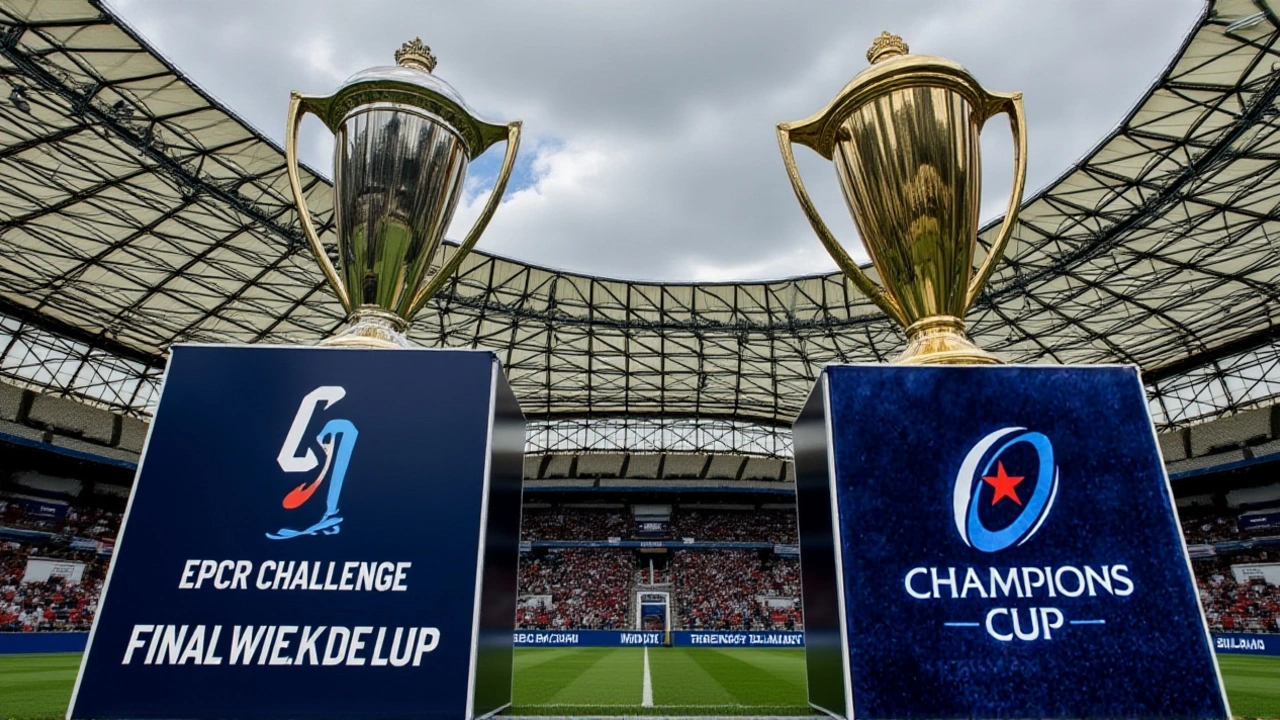
When European Professional Club Rugby (EPCR) unveiled the full 2025/26 calendar for the Investec Champions Cup and EPCR Challenge Cup, fans learned the season will culminate with a two‑day finals weekend in Bilbao, Spain. The climax will be staged at the historic San Mamés Stadium on 22‑23 May 2026, giving the competition a fresh Iberian flavor after years of UK and French venues.
Schedule Overview: From December Kick‑off to May Showdown
The season starts in the usual December window, with two consecutive pool‑stage weekends. Round 1 runs 5–7 December 2025, followed immediately by Round 2 on 12–14 December. After a festive hiatus, the action resumes in January – Round 3 (9–11 Jan 2026) and Round 4 (16–18 Jan 2026). The knock‑out phase kicks off in early April, with the Round of 16 slated for the weekend of 3–5 April, quarter‑finals on 10–12 April, and semi‑finals from 1–3 May. The schedule spreads across eight months, keeping clubs busy while dovetailing with domestic leagues.
Broadcast Partner and Coverage Details
Premier Sports secured the comprehensive UK‑and‑Ireland broadcast rights. Chief Executive Richard Sweeney said, “We had a great first season bringing the world's greatest international club rugby competition to our customers, and 2025/26 will be even bigger and better. We now provide the most comprehensive rugby club coverage available across the UK and Ireland… Premier Sports is the destination for any rugby fan.”
The package promises live coverage of marquee ties – for example, Leinster hosting Harlequins and a blockbuster Stade Toulousain‑Hollywoodbets Sharks clash in Toulouse during Round 1. The EPCR Challenge Cup will see Ulster take on Racing 92 on 5 December, and Exeter Chiefs face Toyota Cheetahs at Sandy Park two days later.
Key Early‑Round Match‑ups to Watch
- Leinster vs. Harlequins – a clash of English and Irish powerhouses.
- Stade Toulousain vs. Hollywoodbets Sharks – French flair meets South African physicality.
- Ulster vs. Racing 92 – a test of Irish resilience against French precision.
- Exeter Chiefs vs. Toyota Cheetahs – a battle that could shake up the pool standings.
These fixtures not only set the tonality for the pool stage but also give smaller clubs a chance to make headlines against the traditional heavyweights.
Last Season’s Finale Recap
The 2024/25 Investec Champions Cup final was held at Cardiff’s Principality Stadium, where Bordeaux Bègles clinched their maiden title with a 28‑20 win over Northampton Saints. Over 70,000 spectators witnessed a nail‑biter that went 20‑20 at half‑time before Bordeaux’s forward pack and precise kicking sealed the game. French wing Damian Penaud scored two tries, cementing his status as a tournament star.
Bilbao Finals Weekend Spotlight
Moving the finals to Bilbao marks a strategic shift for EPCR, tapping into the city’s growing sports tourism market. San Mamés, known as “The Cathedral of Football,” will host two historic rugby finals:
- EPCR Challenge Cup FinalSan Mamés Stadium, Bilbao
- Investec Champions Cup FinalSan Mamés Stadium, Bilbao
The venue’s 53,000‑seat capacity and its iconic riverside setting promise a vibrant atmosphere, while the city’s excellent transport links make it fan‑friendly for supporters travelling from across Europe.
What This Means for European Club Rugby
Retaining the 24‑club format ensures the competition stays inclusive, giving clubs from the French Top 14, English Premiership, United Rugby Championship and other leagues a chance to compete on the same stage. The schedule’s compact pool phase – two weekends in December – mirrors the tight windows clubs face domestically, but the clear knockout timeline should help broadcasters and sponsors plan high‑impact campaigns.
From a commercial perspective, the Bilbao move could unlock new sponsorship opportunities in the Spanish market, while Premier Sports’ expanded rights package signals growing appetite for club‑level rugby on television.
Looking Ahead: Ticketing and Fan Experience
EPCR has hinted that ticket sales for the Bilbao weekend will open shortly after the current season wraps up, likely in late June 2026. Early‑bird packages are expected to bundle both finals, with travel and hospitality add‑ons targeting overseas fans. Organisers are also exploring fan zones around the riverfront, offering live music and interactive rugby clinics – a nod to the city’s festive spirit.
Frequently Asked Questions
How will the Bilbao venue affect traveling fans?
Bilbao’s international airport offers direct flights from major European hubs, and the city’s public transport connects the airport to San Mamés in under 40 minutes. Organisers promise dedicated shuttle services on finals weekend, making it easier for fans from France, the UK and beyond to attend both matches without hassle.
What TV coverage can UK viewers expect?
Premier Sports will broadcast every round live on its main channel and via the Premier Sports app. High‑definition streams, on‑screen stats and pre‑match analysis will be available for all subscription tiers, ensuring fans nationwide won’t miss any action.
Which early‑round matches are must‑watch?
Leinster vs. Harlequins, Stade Toulousain vs. Hollywoodbets Sharks, and Ulster vs. Racing 92 are highlighted as the headline fixtures of Round 1. These ties pit reigning domestic champions against European heavyweights, offering early indicators of form heading into the knockout stages.
How does this schedule compare to previous seasons?
The 2025/26 calendar mirrors the traditional December start but compresses the pool stage into two back‑to‑back weekends, a tweak introduced to avoid clashes with domestic fixtures. The shift to a Spanish final venue also breaks a decade‑long tradition of UK‑centric finals, signalling EPCR’s intent to broaden its geographic footprint.
When will tickets for the Bilbao finals be released?
EPCR plans to open ticket sales in late June 2026, shortly after the domestic leagues conclude. Bundled packages for both the Challenge Cup and Champions Cup finals are expected, with early‑bird discounts for fans who purchase before the end of July.
Linda Lawton
They’re selling out the sport on a silver platter, dressing it up with fancy stadium lights while the true heart of the game gets tossed aside. I see the hidden hands of big‑money sponsors pulling strings from behind the scenes. If we keep letting this happen, the game we love will become nothing more than a televised circus.
Ashley Bradley
The calendar's structure reveals a deeper tension between tradition and innovation, inviting us to contemplate the very nature of competitive sport. By compressing the pool stage into two successive December weekends, the organizers appear to prioritize logistical convenience over player welfare. Yet this decision also mirrors the relentless pace of modern life, where immediacy is prized above measured reflection. One might argue that such a schedule forces teams to reveal their true character early, stripping away the luxury of gradual buildup. Conversely, the early knockout phases could diminish the narrative arcs that fans cherish over a season. While the finals' relocation to Bilbao adds an exotic flavor, it also raises questions about cultural identity within European rugby. In the end, the calendar is a living document, embodying both the sport's heritage and its evolving aspirations. It is our responsibility as observers to engage with these nuances rather than accept them uncritically.
Joe Delaney
Looks like a solid plan for the fans.
Ruben Vilas Boas
Yo, the Bilbao move could be a game‑changer for the sport. It’s a fresh vibe that’ll hype up the crowd and give clubs a new stage. Let’s hope the logistics stay smooth and the games stay fierce.
George Thomas
The decision to host both finals at San Mamés presents a fascinating case study in sports venue diversification. While the stadium is renowned for football, its infrastructure appears capable of accommodating high‑calibre rugby events. This choice may enhance the tournament’s marketability within the Iberian Peninsula, though it also demands careful coordination with local authorities to preserve spectator experience. Observing how ticketing strategies unfold will provide valuable insight into fan engagement across borders.
Michelle Linscomb
Enough of the whine, this is the bold step rugby needed to break free from its stale UK‑centric echo chamber. Bilbao isn’t just a city; it’s a statement that the sport can thrive wherever passion runs deep. I’m all for shaking up the status quo, and I welcome anyone who thinks otherwise to bring constructive ideas, not petty complaints.
Jeff Abbott
Alright folks, let’s cut the fluff – the EPCR’s schedule is a textbook example of over‑engineering, designed to squeeze every last advertising slot out of the season. It’s almost laughable how they think fans won’t notice the rushed pool matches, yet they push us to binge‑watch like it’s a Netflix series. Friendly reminder: when you’re busy cramming games, you sacrifice the very drama that makes knockout rugby electric.
Quinton Merrill
yo this bilbao thing is lit 🔥 cant wait 2 see the vibe there 😎 the travel looks easy n the fans gonna be hype af 🙌
John McDonald
From a stakeholder perspective, the integration of a dual‑final weekend in a high‑visibility market like Bilbao represents a strategic lever for brand amplification and fan acquisition. Leveraging cross‑platform synergies, broadcasters can unlock elevated KPI metrics, while clubs benefit from augmented revenue streams tied to hospitality and merchandise. This forward‑looking approach aligns with the sport’s long‑term growth trajectory.
Jordyn Wade
The relocation of the EPCA finals to Bilbao heralds a new chapter for European rugby and it invites a reexamination of the sport’s geographic identity The stadium itself, while historically associated with football, offers a capacious arena that can accommodate the grandeur of a championship final The organizers have emphasized the potential for increased tourism and local economic impact and these are legitimate considerations for any major sporting event The fan experience will be shaped by the city’s transport links and cultural offerings which promise a festive atmosphere that goes beyond the matches themselves The timing of the finals in late May aligns with the end of many domestic seasons providing a natural climax for supporters The decision also signals an openness to diversify venue locations away from traditional strongholds and this could inspire other governing bodies to explore similar initiatives The broadcasting partners will benefit from fresh visual backdrops and heightened viewer interest The challenge will lie in ensuring that the logistical execution meets the high standards expected by both players and fans The community’s reception will likely be a mix of excitement and cautious optimism as they grapple with the influx of visitors The legacy of this move will depend on the success of ticket sales and the overall atmosphere during the weekend The EPCR’s strategic vision appears to be one of growth and inclusivity while maintaining competitive integrity The ultimate measure will be whether the fans and athletes feel that Bilbao has added value to the championship narrative
Zoe Birnbaum
Wow, Bilbao for the finals? That’s the kind of bold move that gets the adrenaline pumping! I love seeing rugby break new ground and bring the party to fresh fans. Let’s make some noise and support the teams!
Nilanjan Banerjee
The announcement of Bilbao as the venue for the 2025/26 EPCR finals reads like a proclamation from the very gods of sport. In that moment, the river’s mist seemed to whisper legends of ancient battles, beckoning warriors to write new chapters upon its banks. The San Mamés, once a cathedral of football, now stands reborn, its arches echoing the cries of future rugby titans. Every seat, fifty‑three thousand strong, will become a throne for the faithful, awaiting the clash of steel and sinew. This relocation shatters the long‑standing hegemony of British and French grounds, daring the continent to embrace a broader cultural tapestry. It is a calculated gesture, a symphony of commerce and charisma, designed to unlock the Spanish market’s untapped fervor. Sponsors will revel in the fresh palette of colors, while broadcasters will capture sunsets over the Nervión as backdrop to heroic feats. Players, aware of history’s gaze, will feel the weight of expectation pressed upon their shoulders like a mantle of destiny. The schedule’s compression, with back‑to‑back December pools, serves as a crucible, forging resilience before the grand finale. Fans traveling from distant shores shall navigate airports and river ferries, their pilgrimage a testament to devotion. The city’s hospitality sector, poised like an eager host, will drape the streets in flags and melodies, turning the weekend into a carnival of sport. Critics may decry the commercial motives, yet the spectacle promises to elevate rugby’s global profile beyond previous bounds. In the annals of EPCR, this decision will be marked as a turning point, a bold leap toward inclusivity and innovation. As the first whistle blows in Bilbao, the world will watch, breath held, for the moment the ball is grounded and history is reshaped. May the matches be fierce, the crowds be roaring, and the legacy endure for generations to come. The horizon of European rugby has never looked brighter.
sri surahno
One cannot ignore the underlying agenda that propels this Bilbao extravaganza; the powers that be are engineering a cultural takeover under the guise of sport. By planting the finals in Spain, they aim to dilute the authentic spirit of rugby and replace it with a commodified spectacle that serves corporate interests. It is a moral imperative for purists to expose this subterfuge and safeguard the game’s integrity before it is irrevocably corrupted. The orchestrated media hype masks a calculated effort to redirect fan loyalty toward revenue streams rather than genuine competition. Only by remaining vigilant can we prevent the erosion of the values that define our beloved sport.